”Sustainability is more complex than eating vegetarian”
Do you agree? Or are you wondering?
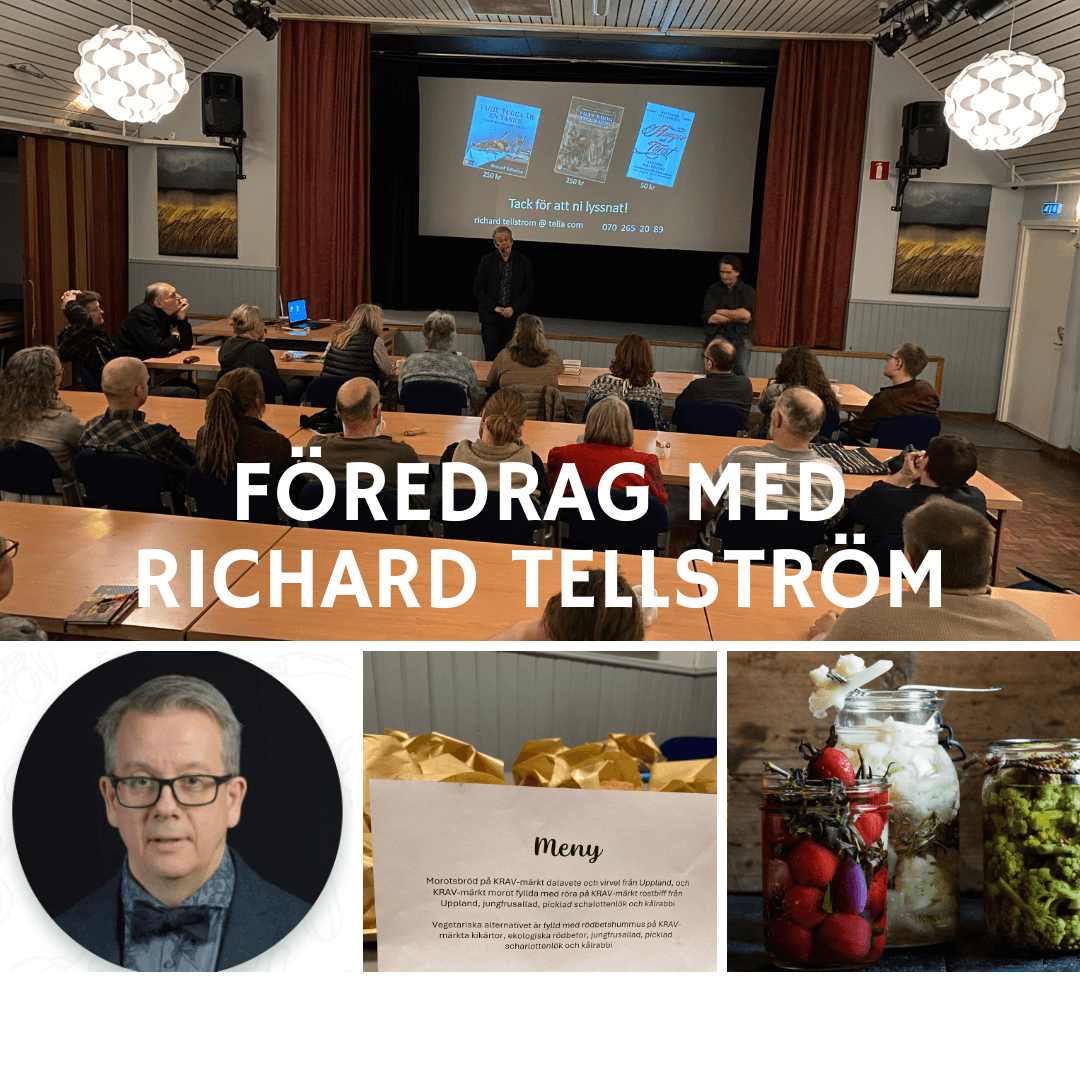
On Monday, February 24th, we gathered at Blå Wingen in Långhundra outside Knivsta to discuss issues surrounding food, food chains, producer conditions and societal values. Among other things.
Richard Tellström took us on a historical look back at food culture in Sweden. Something that is very special for our time compared to before is the demand for fresh food. We don't have to go very far back in time to understand that preserved, fermented, pickled, dried, smoked and stored in the ground were the norm here. What does it mean for our food producers that today's society with its values demands fresh ingredients? In a country with a limited harvest season?
We also talked in small groups about today's structures with fewer and larger farm units. Concerns were expressed that this not only results in a loss of diversity of thought and impulses but also creates great vulnerability for food production in general.
Contingency planning today prioritizes stocks of chemicals and fertilizers very highly, which also means a vulnerability in food production. Shouldn't we be talking about how to make agriculture less resource-intensive?
There were many organic farmers present who raised the issue that farmers are constantly told that they produce too little food, especially for a growing population, but does it make sense to talk about it before the problems of overconsumption and food waste are solved?
As you can hear, there were very big and interesting issues that were discussed. How can we work with this on a more local level?
Luckily, we had local organic sandwiches to eat when we needed to replenish our energy. What a feeling it was to eat bread baked with local organic flour and carrots with a spread of local organic pastured meat and preserved vegetables. Of course, you can eat local organic even in the winter in Uppland! Not obvious for everyone!
This was the first time we co-arranged an event with the Organic Farmers of Uppland but hopefully not the last. Thank you for the good cooperation!
For Upplandsbygd, this is part of the project We Ecopreneurs.