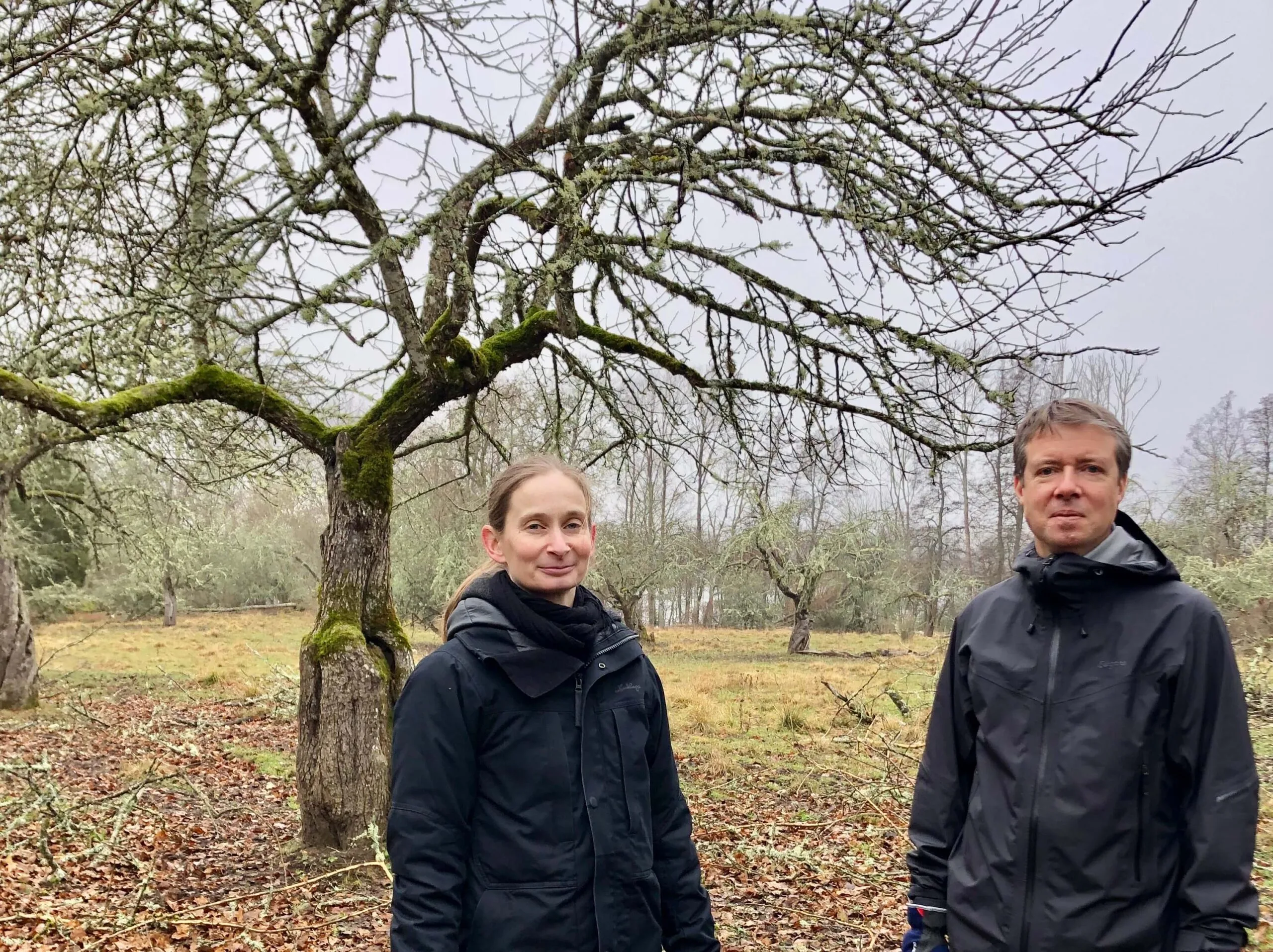
Susanne Loheman from the board and I, My Sellberg from the office, were able to share their solid knowledge and passion for fruit growing and cultural heritage.
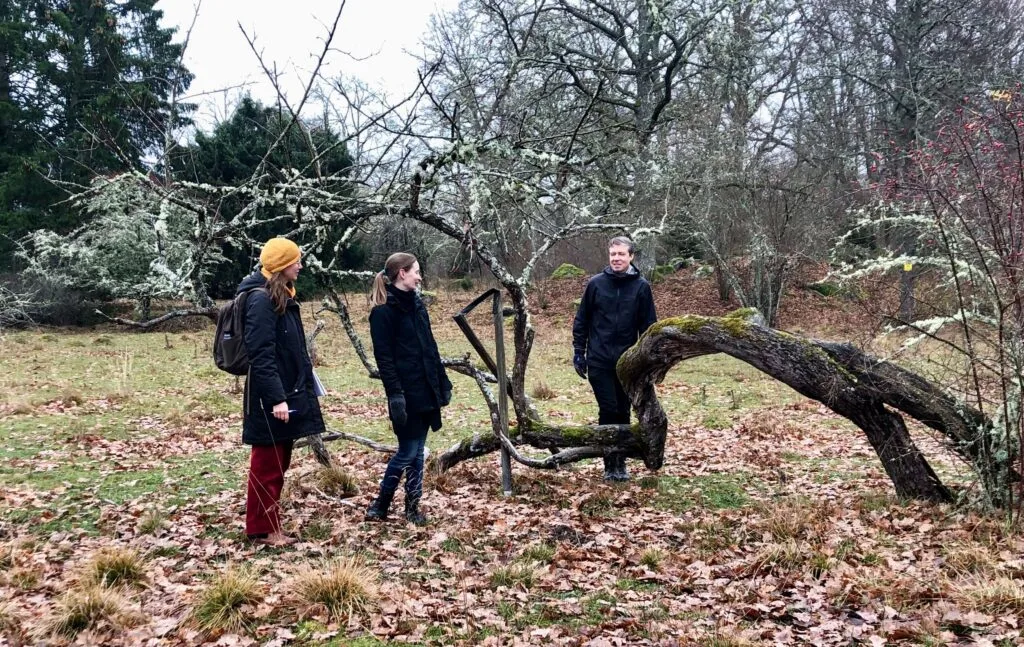
”If there is life, there is hope,” says Louise, pointing to a crooked and hollow tree that she has pruned. Even though the tree is resting on the ground, it continues to bear fruit. The tree is of the Noor glass apple variety – a variety that has arisen in this place and of which only a few trees remain.
A place with history…
Mikael says that what interests him most about the project is preserving cultural heritage. The Mälardalen Valley has been an important place for apple growing. Noors Äppellund probably had around 500 trees and a production peak in the 1930s when many of the apples were sold to Stockholm. Although it is difficult to determine the exact age of the trees, they are estimated to be between 100 and 150 years old. Today's apple production looks completely different – modern apple trees have a lifespan of around 15 years, while the old trees in Noors Äppellund continue to bear fruit.
and a diversity of species
Thanks to the project, Louise and Mikael have been able to inventory the apple trees in the grove and prune about a quarter of them. Louise has done the pruning herself and Mikael is helping, as two people are needed to ensure the work is safe. It is demanding work. The trees are tall and old, it is a long way to drag ladders and equipment, and they have to fence off the curious cows that graze in the grove and help keep the land open. Despite this, both Mikael and Louise are convinced that there is no more beautiful place to work.
”We focus on conservation pruning, which means we extend the life of the trees and highlight their natural character,” explains Louise.
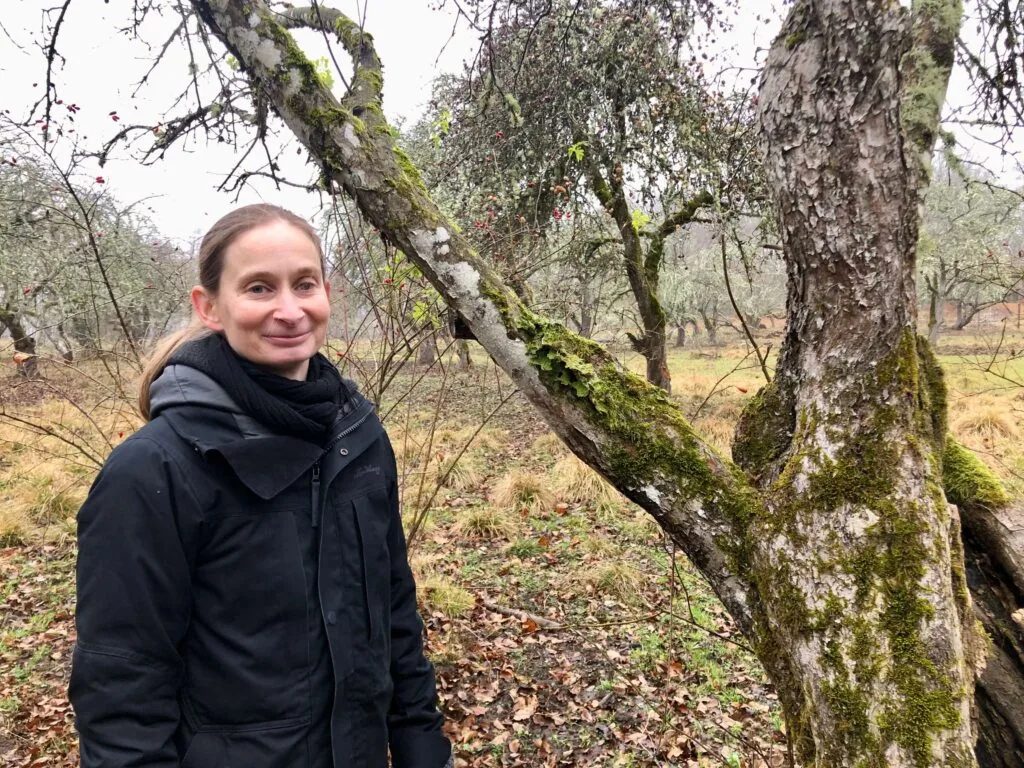
Each tree is considered a unique individual. She also explains that dead wood is important for biodiversity and we see examples of dead branches that have become natural ”insect hotels”. Lung lichen, a species indicating a rich flora and fauna, grows on some of the trees and bats have been seen in the area.
The project highlights the values of the apple orchard
During the inventory, Mikael and Louise have identified 19 different apple varieties in the grove, including the local Noors glass apple. Other varieties found include Grågylling, Rosenhäger, Åkerö, several different Astrakan varieties and Louise's favorite: Tersmeden. They have also come across a few trees that have not yet been identified. Signs will be put up on each tree to show which variety it is and a more comprehensive sign will provide visitors with information about the grove's history and significance. During the year, Mikael and Louise have held two apple walks – one in the spring during the flowering period together with the Swedish Church and one in the autumn in collaboration with the nature school. At the Eda camp apple festival last autumn, they talked about the valuable environment of the apple grove and were met with great interest.
The couple has several ideas for what could be done in the future to preserve and make the apple orchard more visible: to arrange more walks, to continue pruning the trees and to replant trees to restore some of the original rows of trees. However, replanting would require proper fencing so that the new trees can grow large. The cows are happy to eat the apples and branches they can get their hands on and they are also kept company by wild boars, deer and roe deer.
Mikael and Louise are both biologists, Mikael works as a researcher at SLU and Louise is a certified fruit tree pruner and pomologist. Together the couple runs Charlottenlund's trading post and shop in Knivsta.
Read more about the project here and welcome to experience Noors Äppellund – a place where nature and culture meet.